Graduation

I sold a short story this week; my first.  
It’s a big milestone for any writer, and for me, I consider it a graduation of sorts.  After four years of study and applied learning, I have finally achieved the distinction I’ve worked so hard to earn. 
I made the decision to take writing seriously and write full time on March 27, 2009.  I considered going back to school for an MFA degree, but decided against it; mainly because it took too long and was too expensive.  One program which interested me (and I know a couple of people who have completed that 2-year program) advertises their estimated program costs (through graduation) at around $32,000.  When I added up the costs for my 4-year ‘customized home study’, it was closer to $37,000.  Most of the money came from a small inheritance, my own savings, and a pension I cashed in (the taxes about killed me). 
There’s an old saying that a writer must write a million words to purge all the bad writing from his/her system.  When you consider an average novel is 100,000 words, that’s 10 novels (and a lot of writing).  I (wrongly) assumed that because I’d done so much business and technical writing in my professional life, the rule would not apply to me.  Even after thirty years in the high-tech industry (and yes, I havedone rocket science)  it still took me more than four years and more than 800,000 words of practice before I was able to put together a story a professional publisher would be willing to pay for. 
I don’t begrudge the process a penny or a minute. And I’m not a ‘real’ writer yet, only a ‘neo-pro’.  I’ve got a long ways to go. I’ve met wonderful people along the way, and I’m only just beginning to realize how hard I’m going to have to work to make a living at this. I started putting a new business plan together last night.  If I can write +45,000 words per month, and sell them all, I’ll be able to cover about half my living expenses before taxes. 
Of course it’s not really work if you love what you’re doing, and for me,  the writer’s ‘high’ I get from finishing a story is priceless.
Posted in fiction, graduation, rocket science, short story, sold, the price of learning, writer | Leave a comment

Say What You Mean

True story:  I once worked for a big company which was rather well-known in the high-tech industry for having their own corporate ‘language’.  I worked for them for 14 years.  In the beginning, we had profits.  As the years rolled by, the corporate terminology began to favor the term, ‘meeting our profitability goals’.  The cultural terminology continued to evolve, and the company leaders began to talk about ‘achieving profit forecasts’ and eventually, our annual reports talked about ‘pre-currency adjusted profit’.   That was the year I got laid off.  It was also the year the company stock dropped to junk bond status, the CEO resigned, and our CFO was arrested for fraudulent accounting practices.
Call it jargon, call it political correctness, or call it techno-speak, using euphemisms is fatal for writers. 


We use them all the time in our daily life, but when we write, we must be clear and specific, so that our readers can understand what we mean.  We aren’t on a journey; we’re sitting on a crowded bus.  We don’t rise to the challenge, we struggle against our cravings. We don’t meet our profitability goals; we sell a million copies of our book.  The right words have real power.  So say what you mean, because saying it any other way just stinks. 

Posted in euphemism, jargon, no more, say what you mean | Leave a comment

The Inordinate Joy of Organizing 6 Boxes of Books

I would not say I have too many books.  Rather, I prefer to day I do not have enough shelves for my books.  In my old house, I had plenty of storage space, and I kept most of my books on open bookshelves neatly hidden out of view.  While there is much to appreciate about the new place, storage is not a strong suit.  Thus, most of my books have remained unpacked, more than four months after my move.  At least until yesterday, when the bookcases I ordered from the unfinished furniture store were finally delivered (huzzah!). 

Bibliophiles and writers can relate, I think, to the joy of unpacking box after box of books and arranging them neatly onto clean and freshly painted shelves.  One bookcase is now completely dedicated to my ‘to read’ stack (which, until yesterday, I hadn’t realized was quite so big); the other is dedicated to writing craft and research books.  They look so nice in their new home!  My office looks so professional!  Ahhh…pure bliss.
 
The old bookcase has been moved out of my office and into the spare bedroom which has been renamed the reading room, because it’s filled with all the fiction books I’ve already read.  And as much as I am thrilled to have managed to unpack 6 boxes of books, there are still two more boxes which remain unpacked.  Maybe I need just one more bookcase…

Posted in books | Leave a comment

Turning Points

As I mentioned earlier, I attended a Robert McKee ‘Story’ seminar this month.  Although his focus was geared toward screen writers, many of his ideas work for the novelist as well.  Fundamentally, McKee insists that every story is a series of choices which take place between events (or turning points) which result in physical or verbal action. 

These turning point events result in meaningful change (through conflict) in either the story world or the character.  The audience, he contends, focuses on these moments of change.  The change cannot be trivial, must be felt by the reader, and have a measurable ‘value’.  Typically, this might mean the introduction of a new character, the start or end of something, or when something is added or taken away.  McKee also believes that the core value of each scene should switch from positive to negative (or vice versa, depending on the previous value of the scene), and in order to keep the audience’s attention, every scene should have at least one turning point. 
For example, in a love story, the core value of the main plot is ‘love’.  In the opening scene, perhaps the boy is in a negative value where love is concerned, and when he meets the girl, the value changes to positive (their mutual attraction).  Then as the classic plot continues, boy makes choices to get the girl, then loses girl, and the value switches back and forth until the scene is where the lovers fall into each other’s arms and the love value pivots again to a positive turning point.  Similarly, the subplot scenes would be woven into the overall plot, each with their own core value and positive and negative turning points.  As the character makes minor changes as a result of these turning points, they gradually build to more moderate character change at the end of each act.  The suspense inherent in each character’s decision as a result of the choice he/she must make keeps the audience from dropping out of the story.  By the time the story reaches its final climax, the characters have been transformed through irreversible change (the lovers either do the happily ever after or perhaps go the way of Romeo and Juliet), and the audience has been there every step of the way. 
As examples of this idea, McKee examined the plot values for Argo (freedom/captivity) and Silver Linings Playbook (love/control), and everyone in class was pretty amazed at how clearly the screenplays illustrated his point.  It sure changed the way I look at  scenes. 
Posted in character, pivot points, Robert McKee, scenes, story, turning points | Leave a comment

Livin’ La Vida ‘Loha: Early Equinox

The groundhog was right.
Spring arrived early this year; today is the spring equinox for Oregonians.  Sunrise and sunset are exactly 12 hours apart. Daylight savings is the reason, of course, but I don’t mind.  Daffodils are blossoming in nearly every garden, as are fruit trees, camellias, and magnolias.  Purple hyacinths are just starting to show their colors, and the dandelion crop is bursting into bloom.  Even the dogs are sporting a spring in their step. 
Today’s equinox inspired me to review my writing goals for the year.  So far, so good.  I’ve written more than 75,000 words this year, finished a short story (and sent it out), and made plane reservations for the big fantasy convention in October.  I also finished the outline of my new manuscript and started writing the first draft.  On the other hand, I cancelled some of my plans to attend a couple of events which (as the guest speakers and schedules were published) did not turn out to be as promising as originally advertised. 
As I write this, the big plum tree right outside my office window has been transformed by the coming of Persephone into a froth of pink blossoms. 
Hope spring is coming your way, too. 
Posted in equinox, spring, writing goals | Leave a comment

Subtext: It’s Always There

I’m back from Los Angeles, where I spent four intensive days in a Robert McKee ‘Story’ seminar.  Even though I’ve read his book (twice), the live lecture shook loose some new-to-me concepts which I plan to incorporate into my current WIP. 
I have no current aspirations toward screen-writing, but we spent most of the day on Sunday working our way through the script of Casablanca whilst viewing the movie.  Repeatedly, McKee drove home the notion that the strength of the writing in this great movie lay in its subtext.  Truly, Casablanca is a great love story, but nowhere does the character of Rick (as played by Humphrey Bogart) ever tell Ilsa (played by Ingrid Bergman) that he loves her.  Yet each time he tells her, “Here’s looking at you kid,” the audience knows without a doubt that not only is Rick telling her he loves her, but that she is the love of his life, and he will never love another.  That’s powerful story telling. 
Subtext, as McKee defines it, is the unexpressed, subconscious, or inner thoughts and feelings of a character; both the unsaid and un-sayable.  Writers whose characters say exactly what they feel come off as flat and dull.  Fine writers make sure that what is said and what is thought or communicated by a character’s actions rarely agree.  The character’s words are meant to be the truth, but the inner truth is rarely obvious, and that inner conflict raises the tension in a scene, regardless of the author’s medium. 
Posted in Casablanca, emotion, Robert McKee, scene, seminar, story, subtext, writer | Leave a comment

Openings: Into the Mythic

I’ve finished outlining my fourth and latest novel, and am now ready to start writing my first draft. It’s been almost a year and a half since I wrote the first draft of the opening for GLAMOUR.  I’ve learned a lot since then; about readers and writing, plot, character, story, and structure. I’ve taken classes, pored over how-to-write books, and analyzed story openings of other, better (best-selling) writers.  I’ve gotten feedback on the openings of my three previous novels, as well as several short stories, from both published and unpublished writers. 
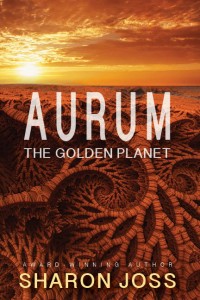
I like to think I’ve incorporated the lessons I’ve learned about how to open any story, and am starting to see for myself what kind of opening is going to work best for mystory.  So for what it’s worth, here’s a list of the 10 major considerations I’m giving to the first 5 pages of the opening for AURUM. 
1.       The opening is the promise to the reader.  For example, a fantasy story should foreshadow or at least mention one or more fantastic elements in the opening. 
2.      Effective story openings start with a CHARACTER in a SETTING with a PROBLEM.
3.      Hook the reader within the first 2 or 3 paragraphs by making those elements unique and/or interesting.  Avoid the generic and clichéd at all costs.
4.      Lock the reader into the character’s head by using all five senses.  Sometimes, sensory input can sometimes best be described through contrast or by what it’s not. 
5.      Strengthen a setting by giving it a history, mood, and/or rich details.
6.      Strengthen a character by giving him/her an attitude about everything in the scene.  Conversely, the only important elements in the scene are probably the only ones the character would notice. 
7.      The problem (or conflict) in the opening may or may not be the story problem, but if the initial (opening) problem is too big, it may be off-putting to the reader.  Give the reader a chance to get to know and care about the character before he falls off the cliff. 
8.     Make sure the character is someone the reader can care about (not necessarily like) or can relate to. 
9.      The opening initiates the forward momentum of the story. 
10.  An effective opening will create a question in the reader’s mind, and whets the reader’s appetite for what comes next.
Posted in author, best seller, character, checklist, fantasy, fiction, novel, Openings, problem, setting, WIP | Leave a comment